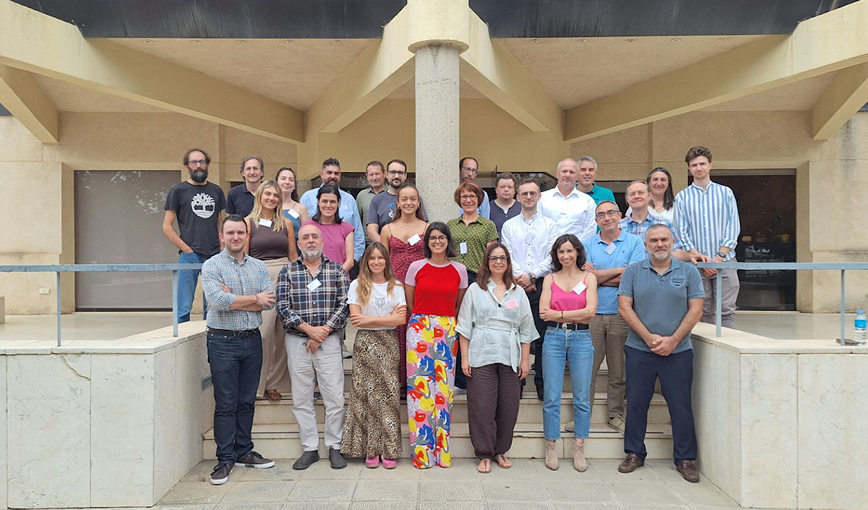
On Friday, 17 July 2026, the Turia Calderona territory hosted a technical visit by several partners of the European HARWASTING project. The visit was organised to examine different sources of forest, agricultural and agro-industrial biomass first-hand and to advance the design of viable business models for their valorisation.
The participants were Michael Renz and Anastasia Rapeyko, from the Universitat Politècnica de València; Aitana Mollà and Mireia Francés, from the Association of Forest Municipalities of the Valencian Community (AMUFOR); Irene Beleña and Manuel Peñalver Oltra, from AIDIMME, the project coordinator; Isidro Clavel, representing Ingelia; and Aitana Camps, manager of the Turia Calderona Local Action Group, who hosted the visit.
HARWASTING is a European Union-funded project under the Horizon Europe programme that focuses on valorising residual biomass from forestry operations, agricultural crops and agro-industrial activities. Its objectives include transforming these materials through hydrothermal carbonisation to produce hydrochar and develop higher-value products, while assessing circular business models capable of creating economic opportunities in rural areas.
Aleppo pine as a forest resource
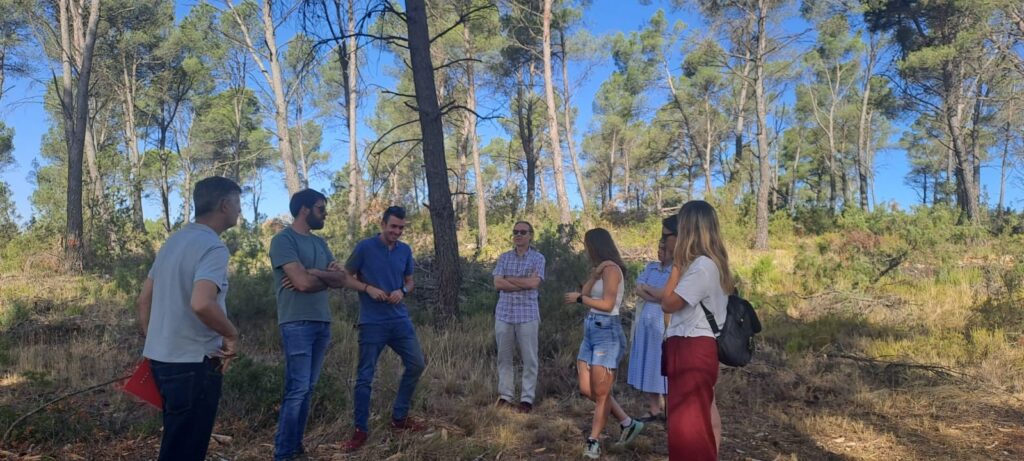
The first stop was a forestry operation in the municipality of Tuéjar. The team was able to observe the characteristics of an Aleppo pine (Pinus halepensis) stand directly, learn about the conditions in which forestry work is carried out, and analyse the properties and availability of the residues generated through its management.
The visit enabled an exchange of information on issues that are fundamental to the project, including the collection, preparation, storage and transport of forest biomass. These factors are decisive in determining whether its valorisation can be technically and economically viable and in defining models that contribute both to sustainable forest management and to the creation of economic activity in the territory.
From olive pomace to new value-added products
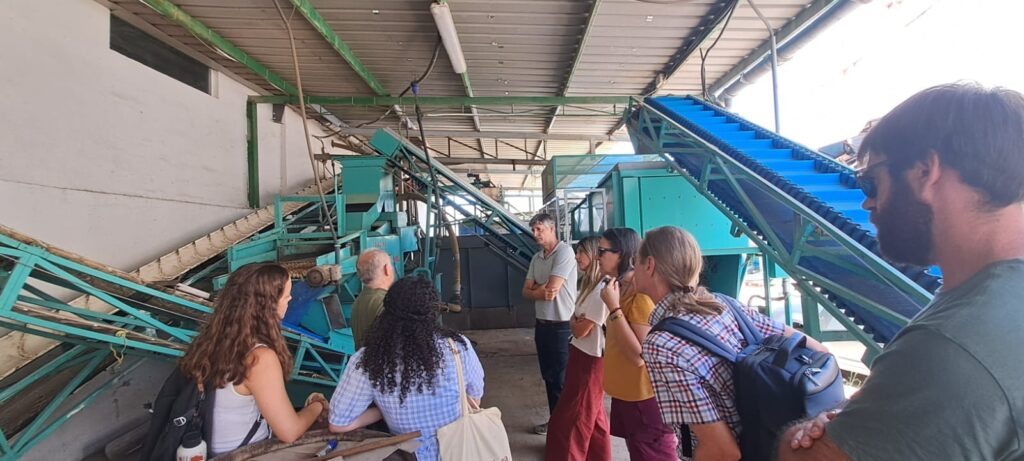
The visit continued at the Hermanos Martínez Zaballos, S.L. olive mill, where its manager, Salvador Zaballos, explained the different stages involved in producing extra virgin olive oil and how the company manages the resulting by-products.
Particular attention was paid to two-phase olive pomace (alperujo), one of the main materials produced by the two-phase olive oil extraction system. Its characteristics, availability and handling requirements are being studied
within HARWASTING to assess its potential integration into new value chains and to identify alternatives that could be both sustainable and profitable for olive mills and the wider territory.
Vineyard pruning residues: from waste to potential resource
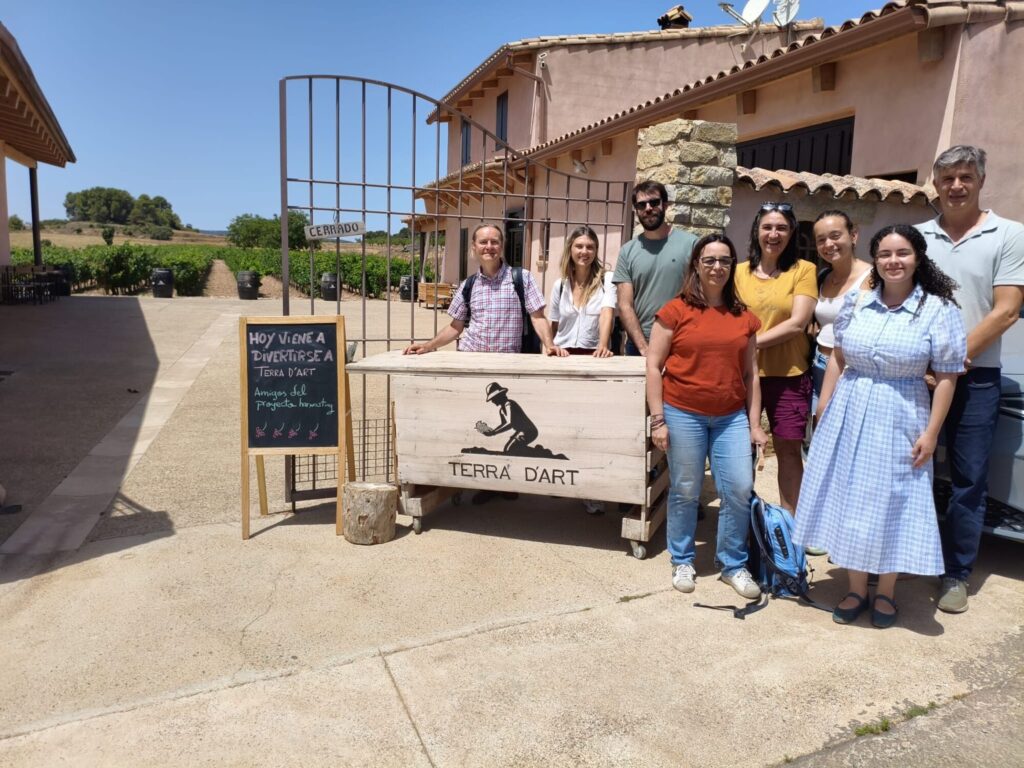
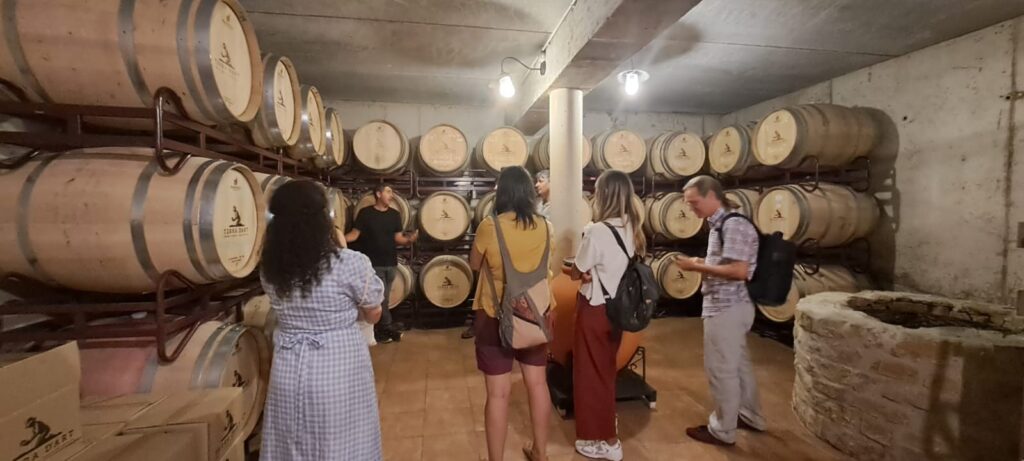
The final visit took place at the Terra d’Art winery, where its manager and winemaker, Juanjo Martínez, showed the group the vineyard and the wine production and ageing facilities.
In addition to learning about vine management and the winery’s production process, the participants examined how pruning residues are currently managed. This agricultural material is another of the feedstocks selected for the HARWASTING Mediterranean case study, together with certain forest and agro-industrial residues.
The exchange with the winery helped identify the real needs of producers and prompted discussion about the conditions that a collection and valorisation system would need to meet in order to be useful, accessible and economically attractive. The aim is to ensure that future business models do not merely offer a technological solution, but can be effectively integrated into the day-to-day work of farmers, businesses and land managers.
European innovation connected with rural areas
The visit brought together the scientific and technological community, the business sector, organisations involved in forest management and the Local Action Group in a single working session. This direct collaboration with territorial stakeholders is one of the essential features of HARWASTING, which aims to develop circular economy models adapted to the conditions of Mediterranean rural areas.
For the Turia Calderona Local Action Group, participation in the project provides a way to bring the needs of farmers, businesses, forest owners and municipalities into the research process, helping to ensure that the solutions developed are applicable, sustainable and capable of generating economic and environmental returns for the territory.
HARWASTING is therefore exploring new ways to turn materials that currently have little value or entail management costs into resources for the bioeconomy, supporting waste reduction, the efficient use of raw materials and the creation of new opportunities for rural areas.
Authors: Aitana Mollá Inza | AMUFOR